Buying a diamond in Michigan can be an exciting experience, especially if the purchase is tied to a meaningful moment such as an engagement, anniversary or family milestone. At the same time, diamonds are complex gemstones and without the right background knowledge it is easy to feel overwhelmed or misled. Prices vary widely, quality is not always obvious at first glance, and not all diamonds are created equal.
Whether you are shopping in a local jewelry store or browsing online, understanding the fundamentals will help you make a confident decision. A well chosen diamond balances beauty, durability and value rather than chasing a single metric like size alone.
Understanding Diamond Carat Weight Beyond Size
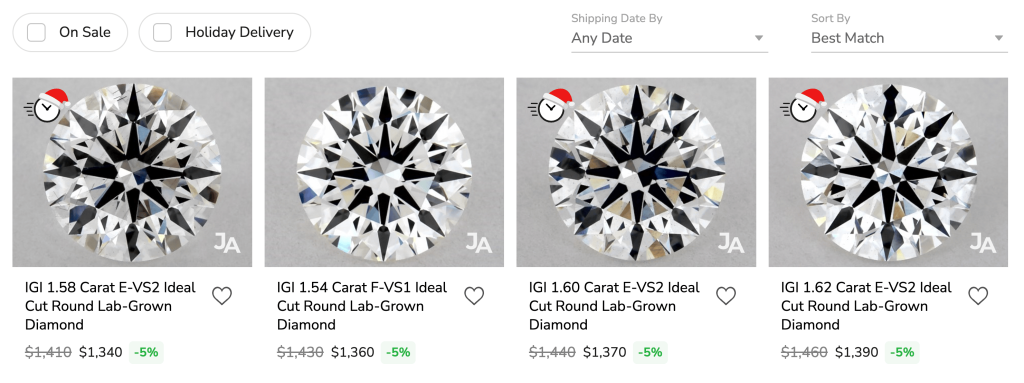
Carat weight is often the first thing buyers notice, but it is also one of the most misunderstood aspects of a diamond. While carat refers to weight rather than physical dimensions, many shoppers assume that a higher carat automatically means a better diamond. In reality, two diamonds with the same carat weight can look noticeably different depending on how they are cut.
A well cut diamond can appear larger and brighter than a heavier stone with poor proportions. Instead of focusing only on hitting a round number such as one carat, it is often smarter to consider how the diamond looks on the hand and how efficiently it reflects light.
GIA’s explanation of carat weight places strong emphasis on the historical origin of the term itself. The word carat comes from carob seeds, which were used in ancient times as a natural reference for weighing gemstones. Early gem traders relied on these seeds because they were believed to be remarkably consistent in weight. Before standardized scales existed, merchants needed a practical way to measure small, valuable objects like diamonds, and carob seeds became a widely accepted solution across trading regions.
While modern gemology no longer relies on seeds, the legacy of this system remains embedded in how diamonds are measured today. One carat is now precisely defined as 0.2 grams, ensuring consistency and fairness in global diamond trading. GIA highlights this history to help buyers understand that carat weight refers strictly to mass, not to visual size or beauty. This distinction is important because two diamonds with the same carat weight can appear very different depending on their cut proportions and shape. Understanding this historical and technical context helps consumers make more informed decisions rather than equating carat weight alone with overall diamond quality.
Diamond Shape and Why It Affects Appearance
Diamond shape plays a major role in how a diamond looks once it is set in jewelry. Shape refers to the outline of the diamond when viewed from above, not to be confused with cut quality, which describes how well the diamond’s angles and proportions are executed. Even diamonds with identical carat weight can appear very different in size and presence depending on their shape. This is one of the first visual decisions buyers should think about because shape strongly influences style, personality, and overall impression.
Round diamonds are the most popular shape worldwide, largely because they are designed to maximize brilliance and sparkle. Their symmetrical outline works well with nearly every ring style and setting. Fancy shapes such as oval, pear, marquise, and emerald cut diamonds create a very different visual effect. Elongated shapes often appear larger than their actual carat weight and can make fingers look longer and slimmer, which is one reason they have gained popularity in recent years.
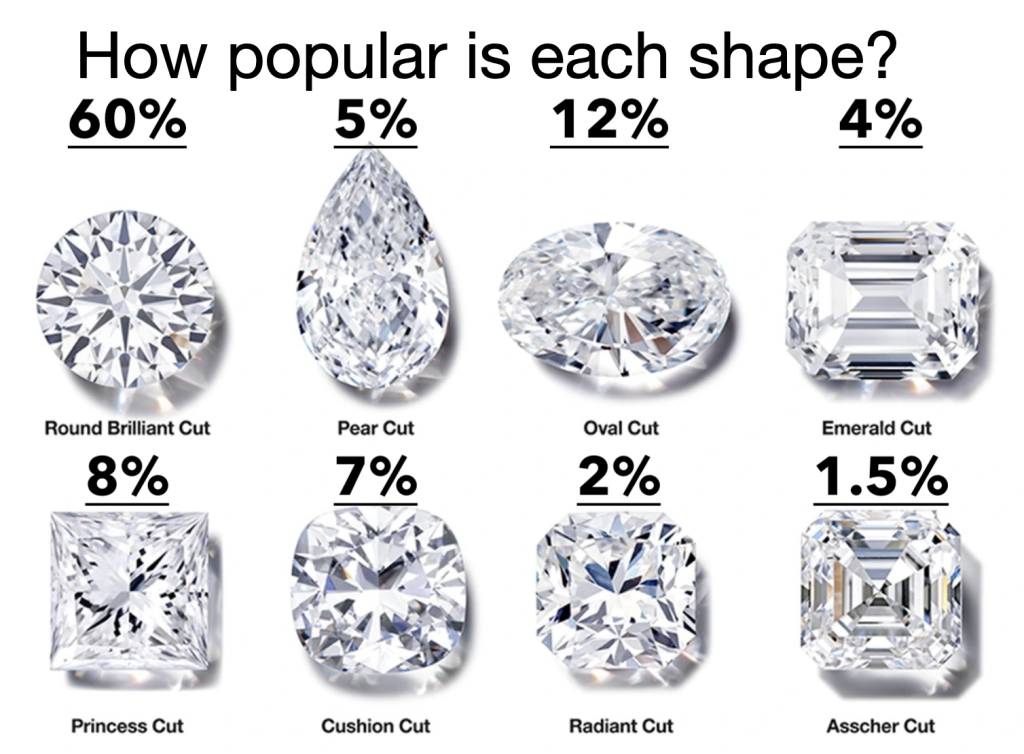
Different shapes also interact with light in unique ways. Brilliant style shapes like round, oval, and cushion diamonds are cut with many facets that enhance sparkle and fire. Step cut shapes such as emerald and Asscher cuts rely more on clean lines, symmetry, and clarity rather than intense brilliance. Because of this, inclusions and color can be more visible in step cut diamonds, making shape an important consideration when balancing beauty and budget.
Finger size, ring setting, and personal taste should all be taken into account when choosing a diamond shape. A shape that looks stunning loose may feel very different once set in a ring or worn daily. This is why it helps to study visual comparisons and real examples before making a decision. Resources such as GIA’s guide on diamond shapes provide useful overviews of how each shape behaves visually and what characteristics buyers should expect from them.
Ultimately, there is no universally best diamond shape. The right choice depends on the look you want, how you plan to wear the diamond and which qualities matter most to you. Some buyers prioritize sparkle, others prefer elegance or a bold silhouette. Understanding how shape affects appearance allows you to choose a diamond that feels intentional rather than accidental and that confidence shows the moment the diamond is worn.
Cut Quality and Light Performance
Cut quality is the single most important factor in determining how a diamond looks once it is set and worn. While carat weight, color and clarity describe a diamond’s physical attributes, cut controls how light enters, reflects and exits the stone. A well cut diamond will appear bright, lively and full of contrast, even if its color or clarity grades are modest. A poorly cut diamond, on the other hand, can look dull and lifeless despite impressive specifications on paper.
Light performance is directly tied to a diamond’s proportions and facet alignment. When angles are properly balanced, light entering the diamond reflects internally and returns to the viewer’s eye. If the pavilion is too shallow or too deep, light leaks through the bottom or sides instead of reflecting back. This leakage reduces brightness and makes the diamond appear darker in the center or around the edges, an effect that is easy to spot once you know what to look for.
Different diamond shapes handle light in different ways, which is why cut standards vary across shapes. Round brilliant diamonds are engineered specifically for maximum light return and are therefore the most forgiving when it comes to performance. Fancy shapes such as oval, pear, and cushion cuts require more careful evaluation because they do not follow a single ideal proportion model. Small variations in symmetry or angle placement can have a noticeable impact on how these diamonds perform in real world lighting. That’s why GIA issues a Cut grade only for round cut diamonds while IGI’s fancy shape cut grading system also issues cut grades for all other cut grades.
Understanding cut quality also helps buyers avoid relying solely on grading labels. Terms like Excellent or Very Good can cover a wide range of actual performance outcomes. Two diamonds with the same cut grade may look noticeably different when viewed side by side. Evaluating light behavior, balance and overall visual appeal allows buyers to make decisions based on how a diamond truly performs rather than how it is described on a report.
Clarity and What Inclusions Really Mean
Clarity describes the presence of natural characteristics inside or on the surface of a diamond, commonly referred to as inclusions and blemishes. These features form as the diamond grows deep underground and are a normal part of a diamond’s natural history. No two diamonds share the exact same inclusion pattern, which makes every stone unique. Clarity grading evaluates how visible these characteristics are under magnification, not whether a diamond is flawless to the naked eye.
What often gets overlooked is that most inclusions have little to no impact on a diamond’s appearance once it is set and viewed in everyday conditions. Many diamonds graded in the VS or SI range appear completely clean without magnification. The location, size and type of inclusion matter far more than the clarity grade itself. A small inclusion near the edge of the diamond can often be hidden by a prong, while a similar inclusion under the table may be more noticeable.
Understanding clarity helps buyers avoid paying for characteristics they cannot see. Higher clarity grades come at a premium, yet the visual difference between a VVS diamond and a well chosen SI diamond is often invisible in real life. Evaluating clarity with the goal of eye cleanliness rather than perfection allows buyers to allocate their budget more effectively, often upgrading cut quality or carat size without sacrificing visible beauty.
Diamond Color and Visual Impact
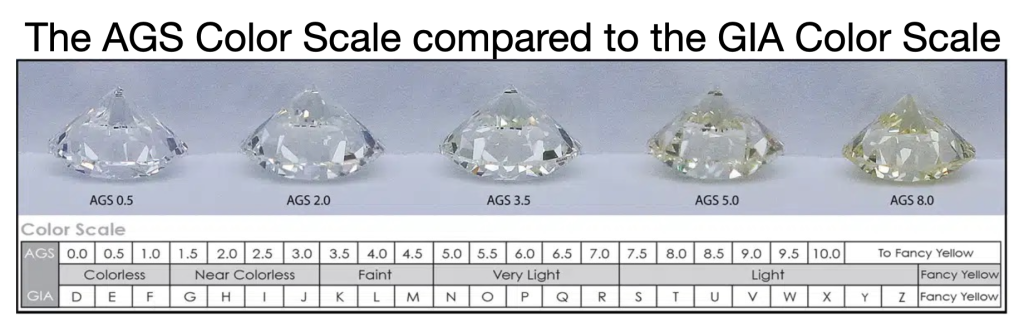
Diamond color refers to the presence of subtle warm tones within a stone, typically yellow or brown, that affect how bright and white it appears. Most diamonds used in engagement rings fall within a narrow range on the color scale, yet small differences can influence visual impact depending on cut, size and setting. Color grading is done under controlled conditions, but real world viewing is far less clinical, which is why color perception often differs from what a grading report suggests.
In everyday wear, a well cut diamond can mask color remarkably well. Strong light return and contrast create brightness that draws the eye away from faint warmth, especially in smaller stones. This is why two diamonds with the same color grade can look noticeably different in practice. Cut quality often plays a larger role in perceived whiteness than the letter grade alone, making color a factor that should be evaluated in context rather than isolation. The image below is an example from the AGS diamond color scale which shows the progression of color from D to Z:
The choice of metal also affects how diamond color is perceived. Yellow and rose gold settings naturally reflect warmth into the stone, making slightly lower color grades appear more harmonious. White gold and platinum provide a cooler backdrop, which can emphasize warmth in larger diamonds but also enhance contrast and brilliance in well cut stones. Understanding this interaction allows buyers to choose a color grade that complements the setting rather than fighting against it.
Diamond size influences color visibility as well. As carat weight increases, the body color becomes easier to detect, particularly in step cuts and elongated shapes that offer larger open facets. Round brilliant diamonds tend to hide color more effectively due to their faceting style, while emerald and Asscher cuts reveal color more readily. This makes shape an important consideration when selecting an optimal color range.
Ultimately, diamond color is about balance rather than chasing the highest grade. Many diamonds in the near colorless range appear perfectly white to the naked eye and offer exceptional value compared to higher graded stones. Prioritizing visual performance over laboratory perfection helps buyers select diamonds that look beautiful in real life, not just impressive on paper.
Buying Diamonds in Michigan With Confidence
Michigan offers access to both local jewelers and online retailers, each with their own advantages. Local stores allow in person viewing and personal service, while online sellers often provide broader selection and competitive pricing. Regardless of where you shop, insist on a reputable grading report from a respected laboratory and take the time to compare multiple options.
If you want a deeper and more practical breakdown of how professionals evaluate diamonds, this guide by Your Diamond Teacher offers a clear and structured approach that many first time buyers find helpful.
Final Thoughts Before You Buy
Buying a diamond should feel rewarding, not stressful. When you understand how carat weight, cut quality, clarity color, and shape work together, you gain the ability to judge diamonds on their true merits rather than marketing claims. With patience and informed decision making, it is possible to find a diamond that delivers lasting beauty and genuine value.
Firemensmemorial.org believes that craftsmanship, knowledge, and thoughtful selection matter. Diamonds are more than luxury items. They are symbols meant to last, and choosing wisely makes all the difference.